
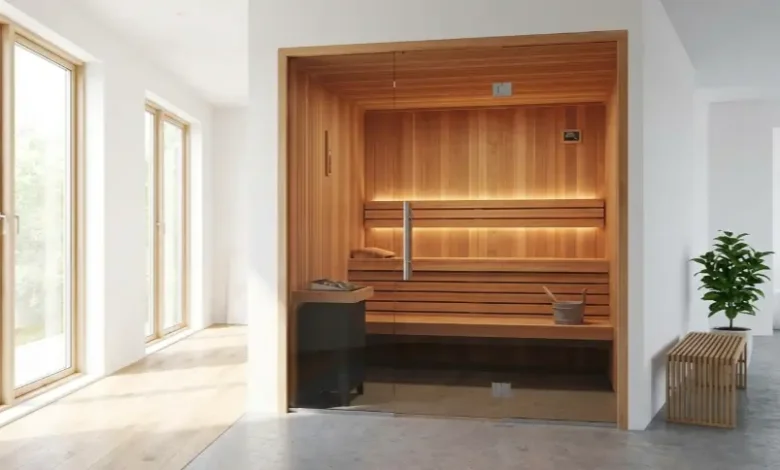
An indoor sauna set up near a home gym gives you a 12 to 20 minute recovery session without stepping outside, and the physiological case for it is mostly cardiovascular rather than muscular. Heat exposure raises heart rate and dilates blood vessels in a way that layers on top of, rather than replaces, the training stress from your workout, and long-term cohort research links regular sauna use to markedly lower rates of fatal cardiac events. Getting the room right matters as much as picking a good heater, since an interior install has different moisture, wiring, and clearance questions than a freestanding backyard unit.
What Actually Happens to Your Body After Training?
Heat exposure functions as a second, gentler cardiovascular stimulus. Your heart rate climbs again, blood flow to skin and muscle increases, and your body works to shed heat through sweating, a process that overlaps with some of the same vascular adaptations aerobic training produces on its own. A 2018 study in Heart and Vessels tracked blood-based markers of cardiovascular function in regular sauna users and found measurable short-term changes consistent with improved vascular function after a single session. None of this is direct muscle repair the way a massage gun or foam roller claims to be. The benefit runs through the circulatory system, not the muscle fibers themselves.
How Much Room Do You Need Inside the House?
A two-person interior cabin generally needs a 4 by 5 foot to 5 by 6 foot footprint plus 24 to 30 inches of door swing clearance, which fits into a basement corner, a garage bay, or a converted closet without major demolition. Ceiling height matters more indoors than most buyers expect, since standard residential framing gives you 7 to 8 feet to work with, and a cabin built for a taller ceiling can force awkward duct routing above a drop ceiling. Measure the actual room, including any ductwork, plumbing, or electrical panel already occupying wall space, before shopping for a specific model.
What Heater and Wiring Should You Look For?
A room this size pairs well with either a 4.5 to 6 kW electric traditional heater or a 1.5 to 2 kW infrared panel setup, both smaller draws than the 6 to 9 kW heaters sized for larger cabins. Infrared units typically run on a standard 120-volt outlet, which sidesteps an electrician’s visit if your basement or garage already has an outlet nearby. Traditional heaters in this range still often need a dedicated 240-volt circuit, which usually means tapping your home’s main panel rather than running an entirely new exterior line, generally a more contained job than the equivalent backyard install. Home sauna prices for a compact interior unit typically run $2,200 to $5,500 depending on heater type and cabin finish, and comparing exact wattage and voltage requirements against your panel’s available capacity, something a retailer like sweatdecks.com lists on individual product pages, is worth doing before you fall in love with a specific cabin.
What Does the Long-Term Evidence Actually Support?
The strongest data here comes from Finnish cohort research. A widely cited 2015 study in JAMA Internal Medicine followed men over roughly two decades and found frequent sauna bathing associated with lower rates of fatal cardiovascular events and all-cause mortality, and a 2018 follow-up in Annals of Medicine found the association held even after accounting for cardiorespiratory fitness separately. Both are observational cohorts, not randomized trials, so the honest framing is association, not proof that sauna use causes the outcome. Still, the pattern holds across multiple independent analyses of the same underlying population, which is more than most wellness claims can say.
How Do You Manage Moisture When the Sauna Shares Walls With Living Space?
This is the part backyard sauna guides skip entirely. An interior cabin sitting against a finished basement wall or a bedroom on the other side of a garage needs a vapor barrier behind the cabin liner and, ideally, an exhaust path that vents humid air to the outside rather than into your home’s HVAC return. Skipping this step can push moisture into adjacent framing over months of regular use, showing up later as musty drywall or a damp smell nobody can place. A qualified installer or electrician can confirm whether your specific room needs a dedicated exhaust duct or whether existing basement ventilation is adequate.
What Should You Check About the Room Before You Buy?
A recovery-focused sauna gets used more often when the room around it works with your schedule rather than against it. Check the door swing against nearby equipment or storage racks, since a cabin door that catches on a squat rack every time defeats the point of a quick post-workout session. Confirm the floor can handle a wet, heavy fixture, particularly in a garage where oil stains or an uneven slab are common, and plan a towel hook and water bottle spot right at the door so the routine takes no extra thought after a hard set. None of this is complicated, but skipping it is why some home saunas end up used twice a month instead of several times a week.
See also: How Choosing the Best SEO Agency in the Philippines Will Supercharge Your Business
A Simple Recovery Routine for a Home Setup
Cool down with a five minute walk and rehydrate before stepping into more heat. Aim for 12 to 20 minutes at 150 to 175 degrees Fahrenheit, building up from 10 minutes if you are new to it. Hydrate again afterward, since sauna sweat losses stack on top of what a hard training session already cost you. If you lift heavy on a given day, save the sauna for a few hours later or for an easier training day instead, since heat exposure immediately after resistance training can interfere with some of the same adaptation pathways your lifting session just triggered. Anyone with uncontrolled high blood pressure, a recent cardiac event, or who is pregnant should treat sauna heat as something to discuss with a doctor first, not something to push through.
Frequently Asked Questions
Is an indoor sauna good for muscle recovery?
It helps the circulatory side of recovery. A 15 to 20 minute session raises heart rate and dilates blood vessels, and regular users show lower rates of fatal cardiac events in cohort studies. It does not replace sleep, protein, or a proper cooldown.
Where in a house should a recovery sauna go?
A basement corner, garage bay, or spare room next to a home gym works well, keeping the walk from weights to heat under a minute. You need a floor rated for a wet, heavy fixture and a wall that can carry a vent to outside air.
How soon after lifting should you use an indoor sauna?
Wait until your heart rate settles from a cooldown, then take a 12 to 20 minute session within the hour. Using heat immediately after heavy lifting on a regular basis can blunt some strength adaptations, so a few hours of separation is reasonable.
What size heater does a small indoor recovery sauna need?
A two-person cabin around 4 by 5 feet typically pairs with a 4.5 to 6 kW electric heater or a 1.5 to 2 kW infrared setup, both smaller than the units sized for larger cabins.
References
- Laukkanen, T. et al. “Association between sauna bathing and fatal cardiovascular and all-cause mortality events.” JAMA Internal Medicine, 2015. https://pubmed.ncbi.nlm.nih.gov/25705824/
- “Joint associations of sauna bathing and cardiorespiratory fitness on cardiovascular and all-cause mortality risk: a long-term prospective cohort study.” Annals of Medicine, 2018. https://pubmed.ncbi.nlm.nih.gov/28972808/
- “Short-term effects of Finnish sauna bathing on blood-based markers of cardiovascular function in non-naive sauna users.” Heart and Vessels, 2018. https://pubmed.ncbi.nlm.nih.gov/29971466/
- “Saunas and your health.” Harvard Health Publishing. https://www.health.harvard.edu/staying-healthy/saunas-and-your-health
By Jonathan Pierce


